


Maigret And The Enigmatic Lett
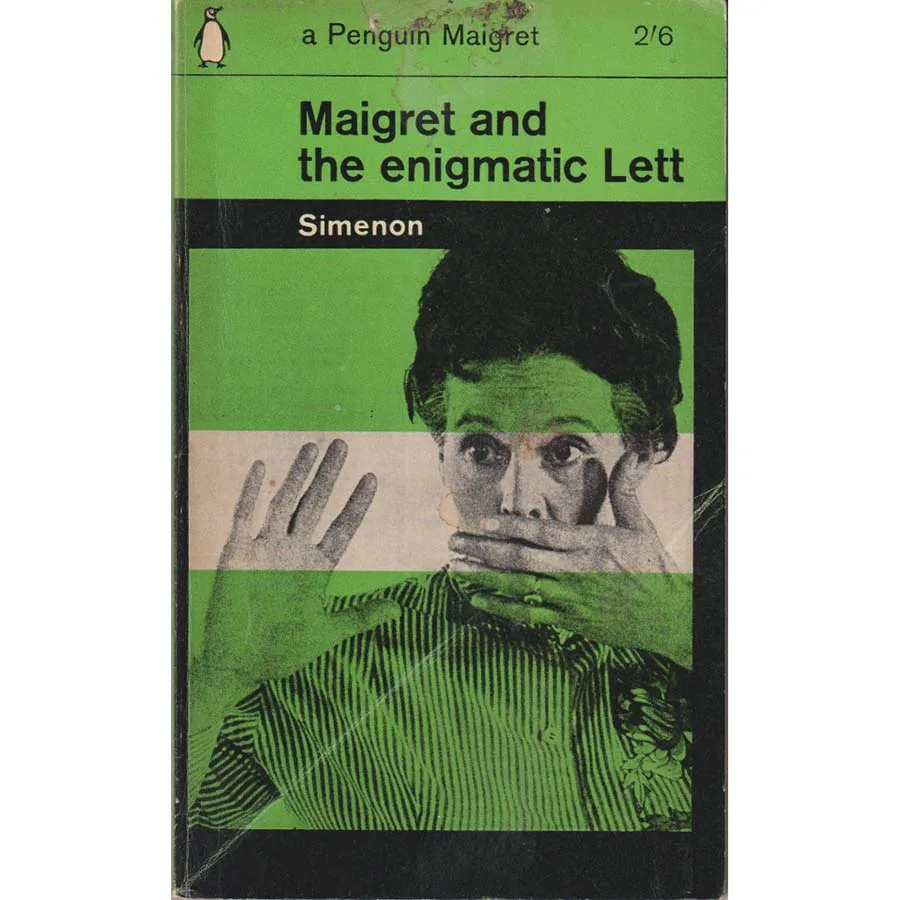
Publisher: Penguin Books
Format: Paperback
ISBN: none
Most detectives spend their careers solving murders, uncovering secrets and dealing with suspicious characters. Inspector Maigret does all of those things too, but unlike many fictional detectives, he also seems perpetually burdened by the feeling that human beings are far more complicated than they have any right to be.
Maigret and the Enigmatic Lett, published here in a 1963 Penguin Books edition, is one of the earliest appearances of Georges Simenon’s celebrated detective. Originally written in the 1930s, it introduces readers to a mystery involving a curious visitor, international intrigue, stolen identities and the sort of atmosphere that Simenon could create almost effortlessly.
The titular Lett arrives in Paris under circumstances that immediately suggest that something is not quite right. Maigret, possessing the highly developed instinct of a man who has spent years observing the strange behaviour of his fellow citizens, quickly becomes interested. Before long, what initially appears straightforward develops into a far more intricate puzzle.
What makes Simenon’s novels so distinctive is that they are rarely concerned solely with solving crimes. Other detective writers present clues like pieces of a mechanical puzzle. Simenon is more interested in people. His mysteries unfold through character, mood and psychology. Readers are invited not merely to discover what happened, but to understand why.
There is a delightful irony in Maigret’s methods. Surrounded by increasingly sophisticated police procedures, he often succeeds through observation, patience and a deep understanding of human nature. While others search for evidence, Maigret frequently appears to be studying the souls of suspects. One suspects modern management consultants would struggle to quantify his approach.
The novel also offers a wonderful glimpse into interwar Europe, a world of railway stations, smoky cafés, anonymous hotels and international travellers carrying secrets across borders. Simenon’s Paris feels entirely real, populated by ordinary people whose lives suddenly become entangled in extraordinary circumstances.
Readers accustomed to modern crime fiction may be surprised by the book’s elegance and restraint. There are no forensic laboratories producing dramatic revelations every twenty minutes. Instead, tension builds gradually as Maigret pieces together the truth through conversation, intuition and relentless curiosity.
Part of the enduring appeal of the Maigret series lies in its humanity. Simenon understood that crime rarely occurs in isolation. Every mystery emerges from a web of relationships, ambitions, fears and mistakes. The result is detective fiction that feels richer and more thoughtful than many of its contemporaries.
This 1963 Penguin Books edition remains in good condition and comes from the shelves of Crappy Old Books. It has survived decades of readers, changing fashions in crime fiction and countless detective rivals while retaining all the charm of a classic Penguin paperback.
An excellent acquisition for crime-fiction enthusiasts, collectors of vintage Penguins, lovers of European literature or anyone curious to meet one of the twentieth century’s greatest fictional detectives. Calm, intelligent and quietly relentless, Maigret remains proof that understanding people can sometimes be more effective than simply collecting clues.
Keep browsing: See more Fiction books Other books by Georges Simenon
